Research
We read the immune system as data. Using high-throughput technologies and computational approaches, we study how immunity develops and responds, from how adjuvants and vaccine formulations improve the magnitude, breadth and durability of vaccine responses, to how the gut microbiome regulates immunity through host metabolism. We design studies and process samples in our laboratory, generate multi-omic data with institutional core facilities and collaborators, and integrate these data to develop and test models of immunity.
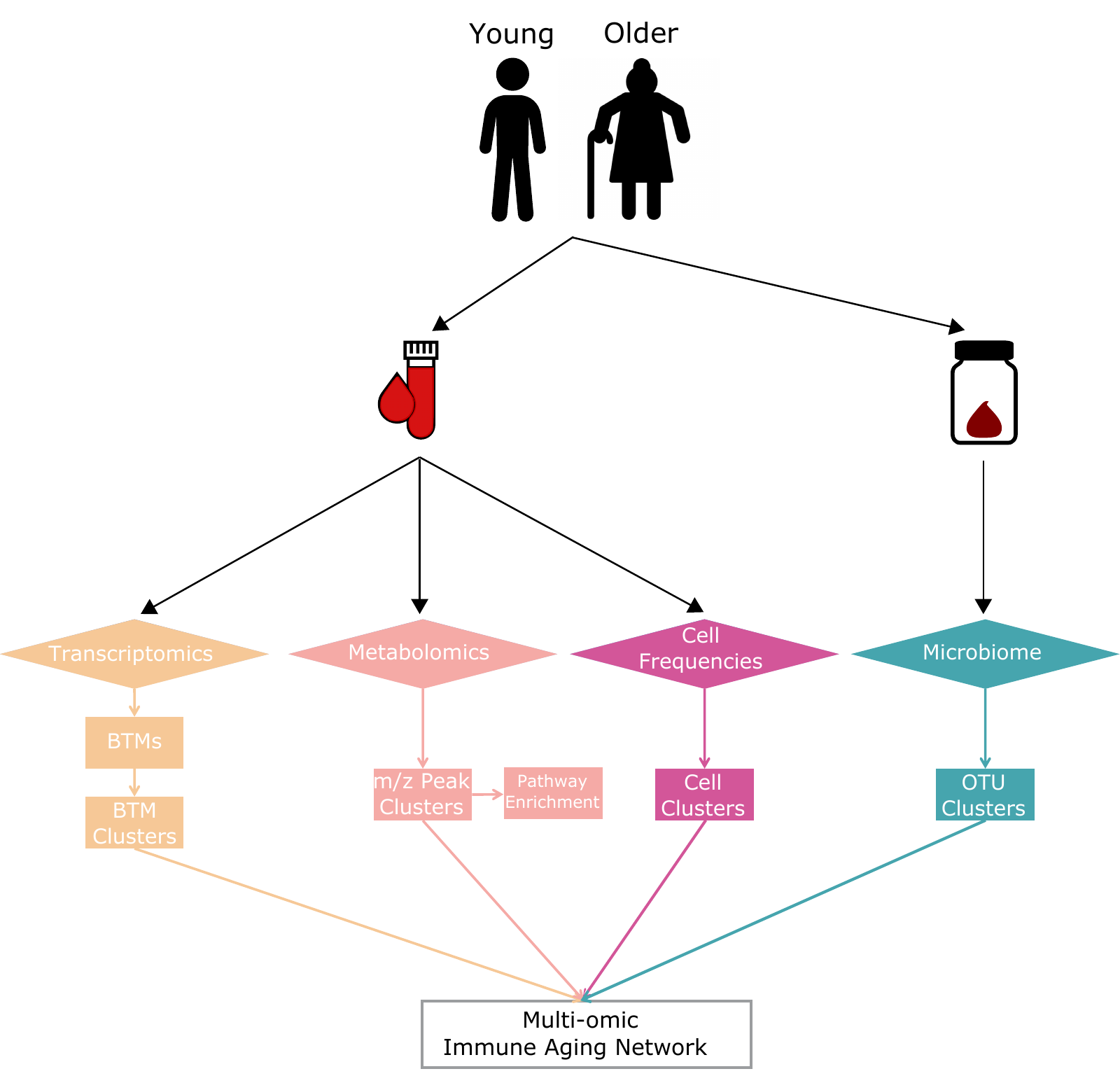
Integrative analysis of the gut microbiome’s role in immune aging
Decline and dysregulation of immune function is a major cause of morbidity and mortality in old age, yet the molecular networks that regulate immune aging, and the causes of chronic inflammation, remain poorly understood. The microbiome changes with age, including decreases in Firmicutes and overall diversity, but how those changes contribute to immunosenescence is unknown.
We are integrating DNA/RNA sequencing, metabolomics and flow cytometry from young (18–45) and older (65+) adults to build a systems-level understanding of the microbiome and immune aging.
- Metagenomics
- Transcriptomics
- Metabolomics
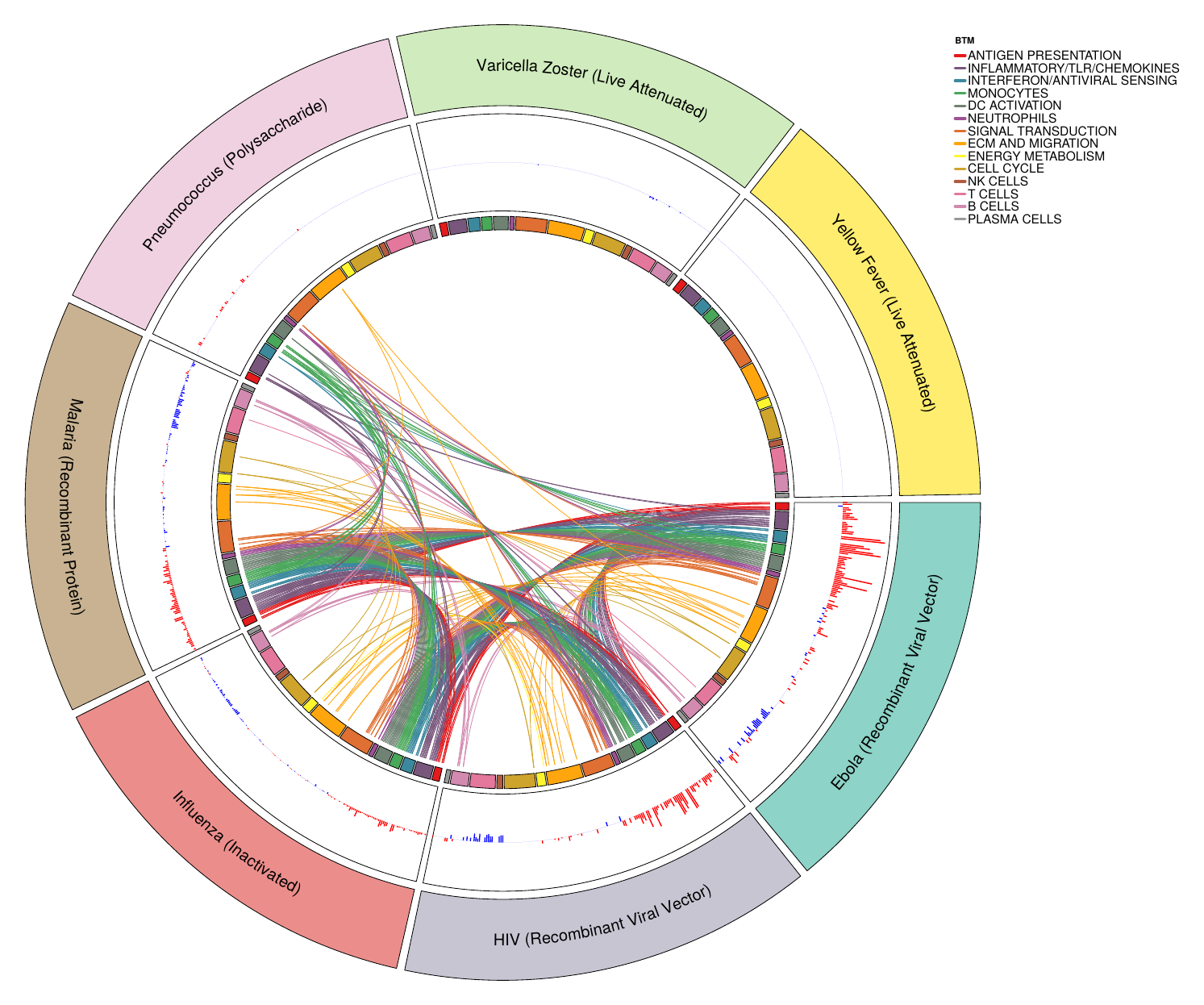
Transcriptional atlas of human immune responses to 13 vaccines
Most systems vaccinology studies examine a single vaccine. Using public datasets, we performed a meta-analysis of over 3,000 samples from 820 adults across 28 studies of 13 vaccines, asking how platform, target pathogen and adjuvant shape the immune response.
Machine learning identifies early transcriptional signatures that predict the magnitude and durability of antibody responses, to guide more effective, longer-lasting vaccine formulations.
- Meta-analysis
- Systems Vaccinology